

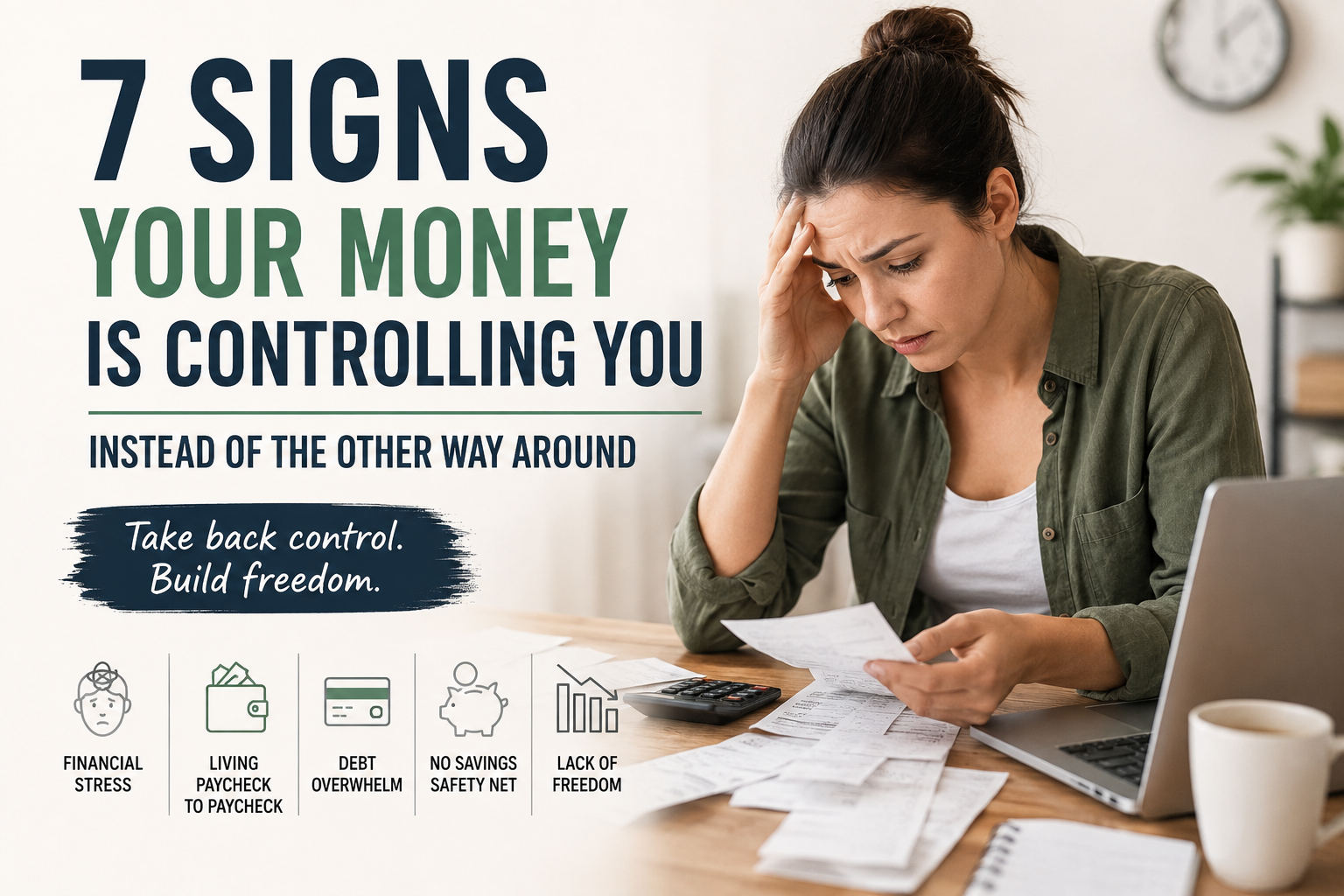
Money is supposed to be a tool.
It should help you build the life you want, reduce stress, and give you more freedom to make choices. But for many people, the opposite is true. Instead of controlling their money, they feel controlled by it.
The good news? Recognizing the signs is the first step toward changing them.
Here are seven indicators that your finances may be running your life—and what you can do about it.
1. You Dread Checking Your Bank Account
If opening your banking app makes you anxious, you’re not alone.
Many people avoid looking at their balance because they’re afraid of what they’ll find. Unfortunately, ignoring your finances doesn’t make problems disappear—it simply delays dealing with them.
Take control: Make checking your accounts a daily or weekly habit. The more familiar you become with your finances, the less intimidating they feel.
2. You’re Living Paycheck to Paycheck
Earning a good income doesn’t automatically mean you’re financially secure.
If every paycheck is already spoken for before it arrives, one unexpected expense—a car repair, medical bill, or home emergency—can throw everything off balance.
Living paycheck to paycheck often means your money is making the decisions for you.
Take control: Start by building a small emergency fund, even if it’s only a few dollars each week. Small, consistent savings create breathing room over time.
3. You Buy Things to Feel Better
Had a stressful day?
Many people celebrate, cope with boredom, or relieve stress by shopping. While retail therapy may provide a temporary emotional boost, the feeling rarely lasts—and the credit card bill eventually arrives.
If spending has become your default emotional response, money is quietly taking control.
Take control: Before making an unplanned purchase, ask yourself, “Am I solving a problem or changing my mood?”
4. You Don’t Know Where Your Money Goes
You know roughly how much you earn.
But could you confidently say where every dollar went last month?
If not, you’re making financial decisions without complete information.
People are often surprised to discover how much disappears through coffee runs, food delivery, subscriptions, impulse purchases, and convenience spending.
Take control: Track your spending for just one month. Awareness alone often changes spending habits without requiring extreme budgeting.
5. Debt Is Growing Faster Than Your Savings
Using credit isn’t inherently bad.
But if balances continue growing while your savings stay flat—or worse, disappear—your finances may be controlling your future.
High-interest debt limits your options and makes every future paycheck work harder.
Take control: Focus on paying more than the minimum payment whenever possible, while avoiding adding new debt for non-essential purchases.
6. Unexpected Expenses Feel Like Emergencies
Life happens.
Cars break down.
Appliances fail.
Kids need new shoes.
These aren’t unusual events—they’re predictable parts of life.
If every unexpected expense creates panic, it usually means there’s no financial cushion.
Take control: Even a modest emergency fund can turn a financial crisis into a temporary inconvenience.
7. You Feel Like You’ll Never Get Ahead
Perhaps the biggest sign of all is feeling stuck.
You work hard.
You pay your bills.
Yet your financial situation never seems to improve.
Often, this isn’t because you’re failing—it’s because you don’t have a clear system for managing your money.
Without a plan, it’s easy to drift from paycheck to paycheck while wondering why nothing changes.
Take control: Set small, measurable goals. Saving your first $500, paying off one credit card, or tracking every expense for a month are wins that build momentum.
Money Should Give You More Freedom
Financial freedom doesn’t require being wealthy.
It starts with knowing where your money goes, making intentional decisions, and creating habits that support your long-term goals.
You don’t need to overhaul your life overnight.
Small improvements—tracking your spending, reviewing subscriptions, building a modest emergency fund, or planning purchases instead of making impulse buys—can completely change how you feel about money.
The goal isn’t perfection.
It’s confidence.
Because when you tell your money where to go instead of wondering where it went, you’re no longer reacting to your finances—you’ve started taking control of them.
Every positive financial habit begins with one simple decision: paying attention today so tomorrow becomes a little easier.