

Have you ever looked at your bank statement and wondered, “Where did all my money go?”
For many people, it’s not the expensive vacation or the new television that quietly drains their finances. It’s the small, everyday purchases that seem harmless in the moment but add up over weeks, months, and years.
This doesn’t mean you should never treat yourself. Spending money on things you genuinely enjoy is part of living a balanced life. The key is recognizing which purchases bring lasting value—and which simply become expensive habits.
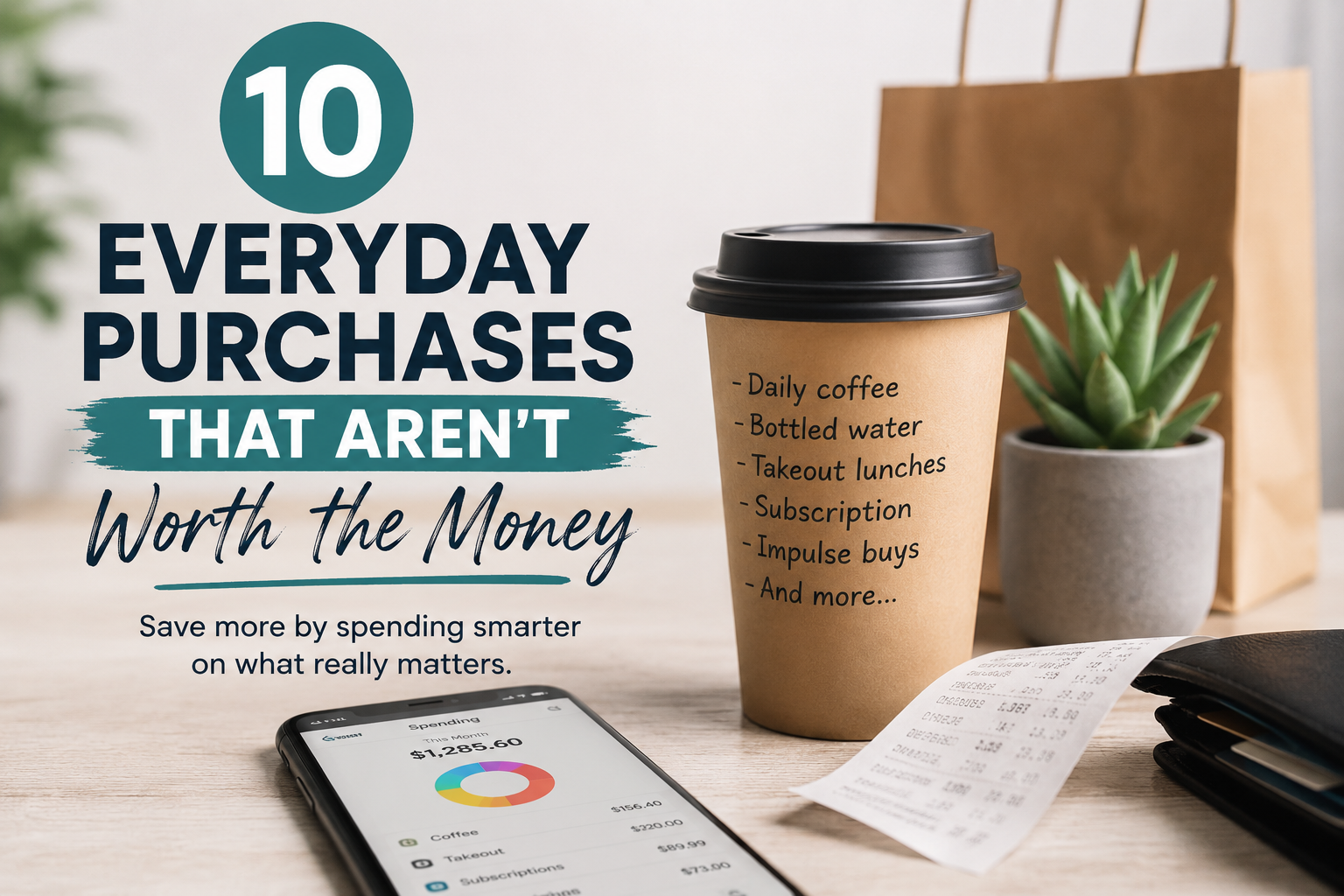
Here are ten everyday purchases that are often worth reconsidering.
1. Bottled Water
Unless you’re traveling or don’t have access to clean drinking water, bottled water is one of the easiest expenses to eliminate.
A reusable water bottle and a quality filter can save hundreds of dollars each year while also reducing plastic waste.
2. Daily Coffee Runs
Buying a specialty coffee every workday may not seem expensive.
But spending $6 each weekday adds up to over $1,500 per year.
You don’t have to give up coffee—just make more of it at home and save the café visits for occasions you truly enjoy.
3. Unused Subscriptions
Streaming services, fitness apps, cloud storage, premium memberships—it all adds up.
Many people pay for subscriptions they barely use simply because the payments happen automatically.
Review your subscriptions every few months and cancel anything that no longer adds value.
4. Extended Warranties on Low-Cost Items
Retailers often encourage customers to purchase extended warranties.
For inexpensive electronics or household items, these warranties frequently cost more than the likelihood of ever needing them.
In many cases, setting aside that money yourself is the smarter choice.
5. Convenience Store Snacks
A quick snack or drink while filling up your car rarely feels like a big purchase.
But convenience stores often charge significantly more than grocery stores for the exact same products.
Planning ahead with snacks from home can save both money and impulse purchases.
6. Premium Brand Names
Brand loyalty is powerful, but higher prices don’t always mean better quality.
Many store-brand products—from pantry staples to medications—are nearly identical to their name-brand counterparts at a much lower price.
Comparing ingredients instead of labels can make a noticeable difference over time.
7. Food Delivery Fees
Ordering delivery occasionally is perfectly reasonable.
Making it a habit, however, means paying delivery charges, service fees, tips, and menu markups.
That $20 meal can easily become a $35 purchase.
Cooking at home just a few extra nights each month can lead to meaningful savings.
8. Impulse Purchases
Online shopping has made impulse buying easier than ever.
A simple trick is to follow the 24-hour rule: wait one day before purchasing anything that wasn’t planned.
You’ll often discover that the urge disappears entirely.
9. Bank Fees
Monthly account fees, ATM charges, and overdraft costs are expenses many people simply accept.
Yet many financial institutions offer fee-free accounts or ways to avoid these charges altogether.
It’s worth reviewing your banking options.
10. Cheap Items That Need Constant Replacing
Buying the lowest-priced option isn’t always the cheapest decision.
Poor-quality products often wear out quickly, meaning you end up buying them again and again.
Sometimes paying a little more upfront for something durable saves money over the long run.
Spend Intentionally, Not Perfectly
Saving money isn’t about cutting every enjoyable expense from your life.
It’s about identifying the purchases that don’t truly improve your happiness and redirecting that money toward the things that matter most—whether that’s building an emergency fund, paying off debt, investing for the future, or simply reducing financial stress.
One of the best ways to spot unnecessary spending is to track where your money actually goes. Most people are surprised by what they discover after just a few weeks.
Small changes made consistently often have a bigger impact than dramatic lifestyle overhauls.
Your future self will thank you for every intentional decision you make today.